Headache patterns and what may help you feel better

Sudden, extremely severe pain, new weakness, trouble speaking, confusion, or high fever with a stiff neck needs emergency care. Do not use an illustration to rule out an emergency. 

This Chăm mình article develops ideas from Dr. Shuu-Jiun Wang’s (王署君) conversation on 博音 EP246. Practical guidance was checked against the clinical sources below. General education for adults; this article has not received individual clinician review.
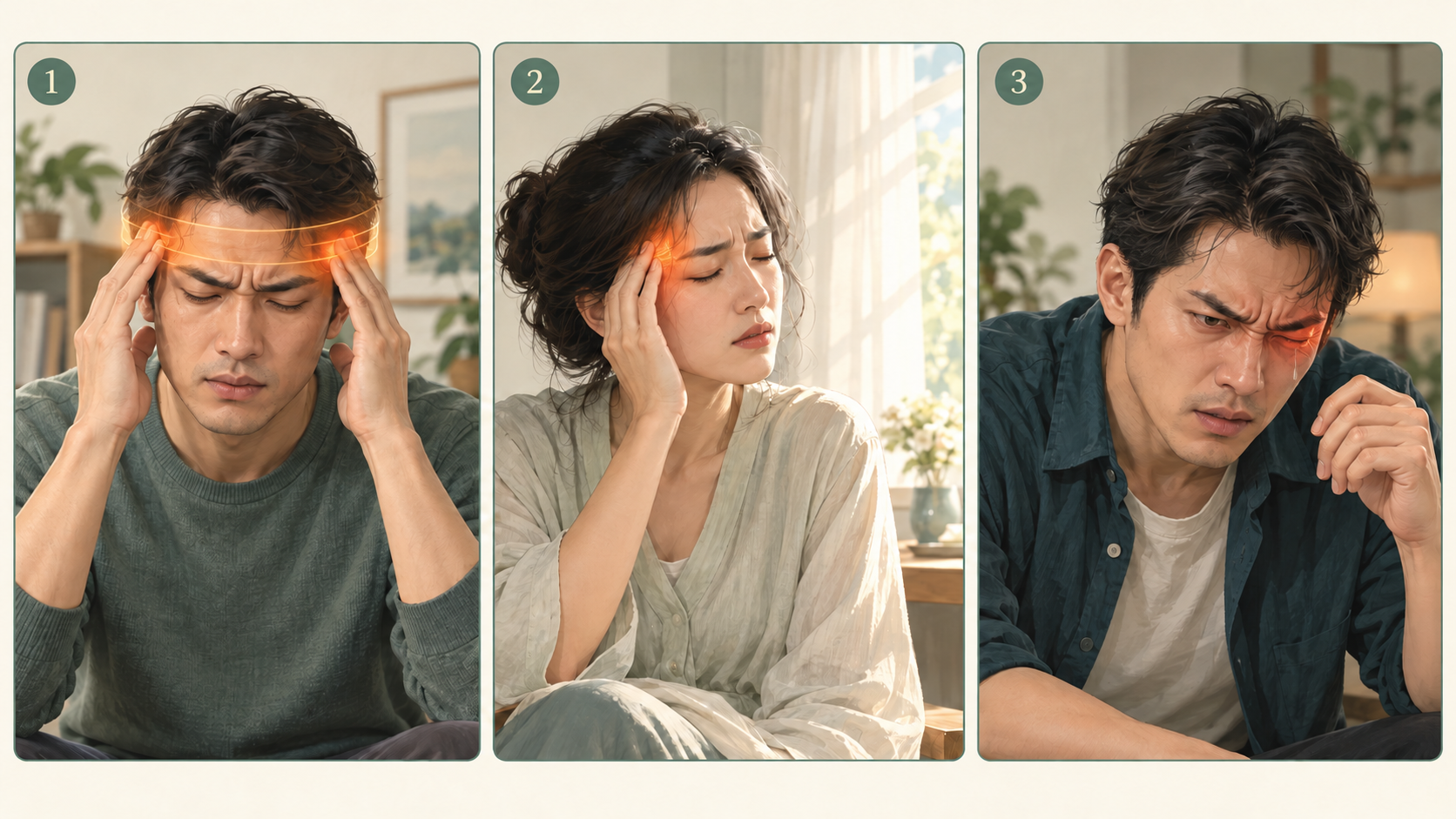
1/ Bilateral pressure. 2/ One possible migraine presentation. 3/ One-eye pain with same-side tearing in cluster headache. AI illustration; location alone cannot establish a diagnosis.

1. Three patterns to understand, rather than self-diagnose

Tension-type headache commonly feels pressing or tightening on both sides. The name does not mean every episode comes from worrying; sleep and other factors may also be involved.

Migraine often brings throbbing pain, sometimes on one side, with nausea or sensitivity to light or sound. Not everyone with migraine has one-sided pain.

Cluster headache is rarer: extremely severe pain around one eye, possibly with tearing or redness on the same side and restlessness. It needs assessment and specific treatment; ordinary paracetamol or ibuprofen does not treat these attacks.

Dr. Wang also distinguishes headache types in the original discussion. Symptoms can overlap, and other causes are possible.

2. Start with what helps you feel comfortable

During a familiar migraine, try a quiet room, softer light and a cool pack wrapped in cloth if that feels soothing. Do not place ice directly on skin. These measures support comfort and do not replace your advised medicine or treatment plan.

Between episodes, regular meals, enough water and a reasonably consistent sleep schedule are practical starting points. Self-care need not become a long list to perform perfectly. Begin with the part of your routine that is easiest to overlook.

Quiet dim rest, a cool pack wrapped in cloth, regular meals and water. AI illustration.

3. If you want to try Hegu acupressure

Hegu, or LI-4, is on the back of the hand between the bases of the thumb and index finger. MSK describes firm, non-painful circular pressure for about 2–3 minutes. Its linked guide provides pictures to locate the point and follow the steps.

Do not use this point during pregnancy, or over broken, irritated or infected skin. This is an optional comfort measure, not a way to identify the cause of a headache or delay assessment of unusual symptoms.
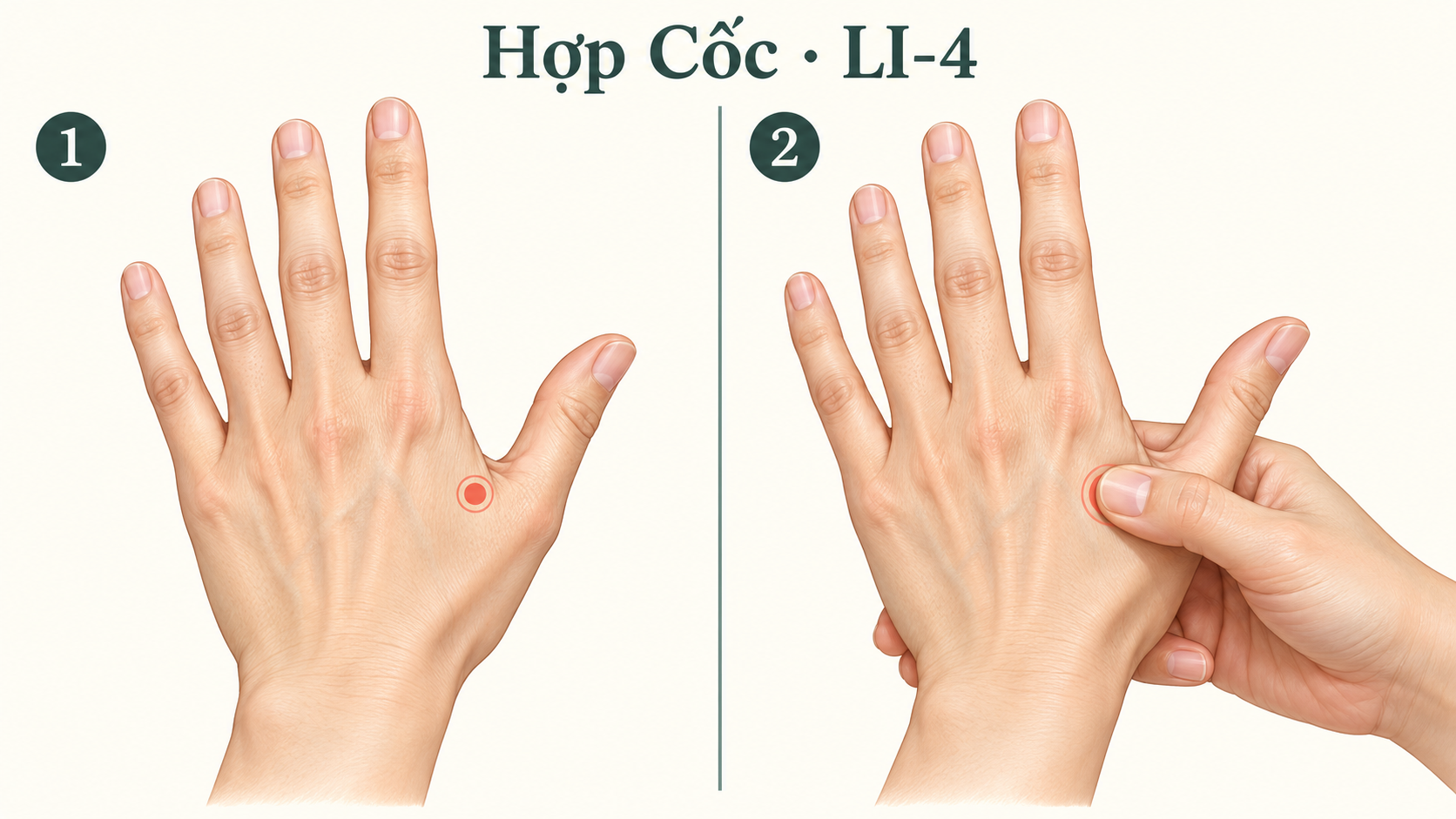
1/ Hegu on the back of the hand between the thumb and index bases. 2/ The other thumb presses the same point, with the index supporting underneath. Use firm, non-painful pressure. AI illustration; see MSK instructions [6].
1/ Hegu on the back of the hand between the thumb and index bases. 2/ The other thumb presses the same point, with the index supporting underneath. Use firm, non-painful pressure. AI illustration; see MSK instructions.

Something that helps you feel more comfortable does not necessarily treat the cause. Both ideas belong in self-care.

4. Notice patterns without blaming a single meal

One headache after a meal or late night does not establish a cause. Record dates, duration, symptoms, medicines, meals, sleep and effects on daily life. If you notice a menstrual pattern, include that for discussion at your appointment.

The purpose is to notice a repeating pattern and help a clinician understand your experience, not to track every detail perfectly. For frequent or hard-to-control pain, bring that record to an appointment instead of continually adding isolated remedies.

A man discusses a headache record with a fictional clinician. AI illustration.

5. Recognise when you need support

Book an assessment if headaches recur, worsen or interfere with life. New severe eye pain, vision changes, or a new or severe headache during pregnancy or after birth needs urgent assessment. A first episode of a drooping eyelid or unequal pupils needs emergency care, even if you suspect cluster headache.

One small step today is to record your most recent episode and what helped or did not help. If your next question is whether to take a painkiller, the related article below explores that decision.


Should you take a painkiller for a headache

Seek emergency care for a sudden, extremely severe headache, new weakness, trouble speaking, confusion, or high fever with a stiff neck. Do not wait for a painkiller to work in these situations.

Developed by Nương Nương from headache specialist Dr. Shuu-Jiun Wang’s (王署君) discussion on 博音 EP246, with the clinical guidance linked below. General education for adults; this article has not received individual clinician review.

A woman considers how to respond to a headache beside water and an unbranded medicine packet. AI illustration.

1. Pain relief can be a sensible choice

When discussing fear of medicine, Dr. Wang does not present enduring pain as a way to train pain tolerance. The useful takeaway is to seek appropriate relief when pain disrupts life. This paraphrases his discussion; it does not mean every headache should be self-treated.

Ask both “What could help me feel better now?” and “Why does this keep happening?” A suitable medicine may answer the first. The second may need a conversation with a clinician.

2. Read the active ingredients first

Paracetamol, also called acetaminophen, appears in many pain-relief and cold-and-flu products. Check every product you are taking to avoid duplication; an overdose can damage the liver. Follow the packet or your prescription, including dose intervals and limits.

Ibuprofen is a non-steroidal anti-inflammatory drug (NSAID). Do not add another NSAID, such as naproxen, yourself. Ask a pharmacist or clinician about suitability if you are pregnant, have had stomach ulcers, liver or kidney disease, asthma or painkiller reactions, or take other medicines. One option does not suit everybody.

A woman asks a pharmacist about medicine information; no dosing instructions are shown. AI illustration.

3. Timing belongs to your headache plan

If you have diagnosed migraine, follow your agreed plan for an attack. NHS guidance advises taking a painkiller when the headache starts; you do not need to wait until pain is severe before following the advice you have been given.

That does not mean taking medicine pre-emptively for every unfamiliar symptom. A new severe headache, a substantial change in pattern or a worrying new symptom needs assessment. A medicine that works for a friend is also not enough information to choose your own treatment.

4. Notice when taking tablets becomes routine

Using acute headache medicine too frequently can contribute to medication-overuse headache. This is a clinical diagnosis involving the medicine, headache frequency and duration of use. It is not a reason to label yourself “addicted” after reaching a single number.

Arrange a review if you need medicine on more and more days, it no longer helps as before, or headaches disrupt work and sleep. Do not simply increase doses, cycle through products or abruptly stop prescribed treatment yourself. A clinician can review acute treatment and consider appropriate prevention.

When pain keeps returning, the next useful addition may be a care plan, rather than another tablet.

5. Bring a clearer picture to your appointment

You do not need to remember every episode. Briefly record the date, duration, pain, accompanying symptoms, medicine taken and effect on daily life. Medicine names and days of use are as useful to note as pain severity.

Later in the interview, Dr. Wang discusses control and prevention when headaches recur. A simple record gives that conversation a starting point: what happens, what you have tried, and what you want to be able to do more comfortably.

A man discusses a headache record with a fictional clinician. AI illustration.

6. Choose the next step for this episode

For familiar pain without warning signs, check the medicine instructions and your existing care plan. If ingredients or suitability are unclear, take the packet to a pharmacist. For frequent, persistent or worsening headaches, book an assessment instead of repeatedly changing medicines.

Alongside the emergency signs above, headache following a head injury or with loss of vision needs emergency assessment. A new or severe headache during pregnancy or after birth needs urgent medical advice. Taking care of yourself includes recognising when to ask for help.

What is baked pear with bird’s nest? An East Asian wellness dessert

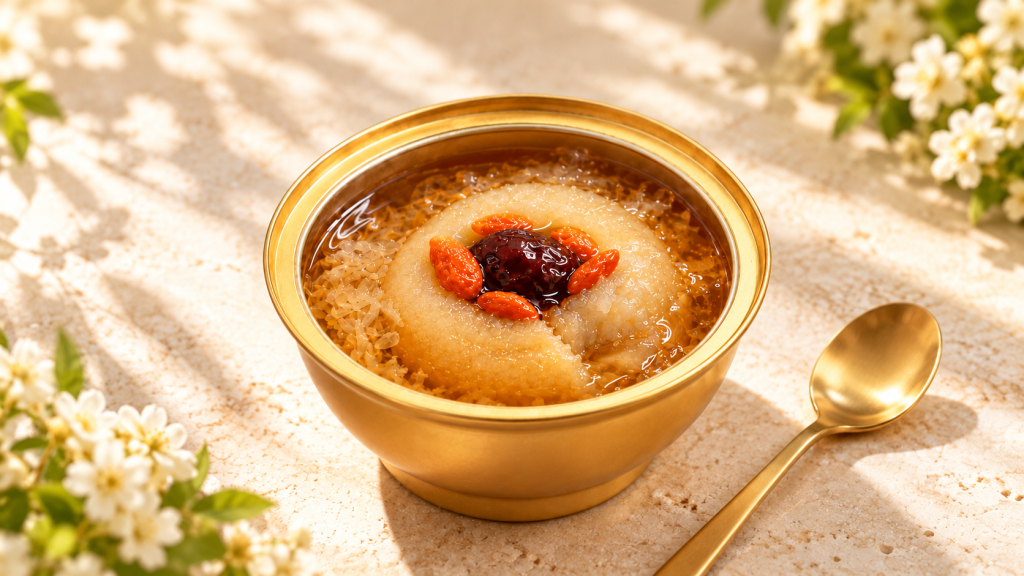
Baked pear with bird’s nest combines soft-cooked pear, edible bird’s nest, snow fungus, red dates, goji berries and yellow rock sugar. There are several textures to discover in one bowl: pear you can cut with a spoon, fine strands of nest and slippery fungus fronds in a sweet liquid.

If you are curious about where these ingredients come from, join Nương Nương in following their journey from growing region to prepared bowl.

The origin and ingredient-selection stories below follow information supplied by the manufacturer. Additional references appear at the end.

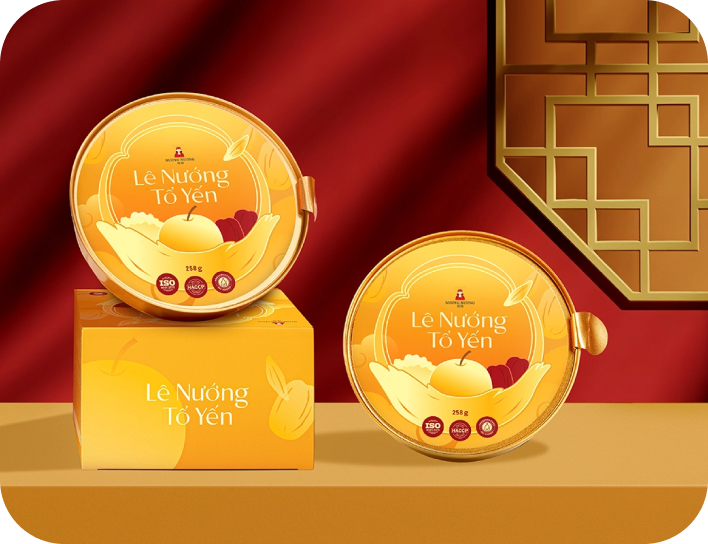
Baked Pear with Bird’s Nest — a product illustration developed from the existing product images.

1. Dangshan pear — From the orchards of Anhui

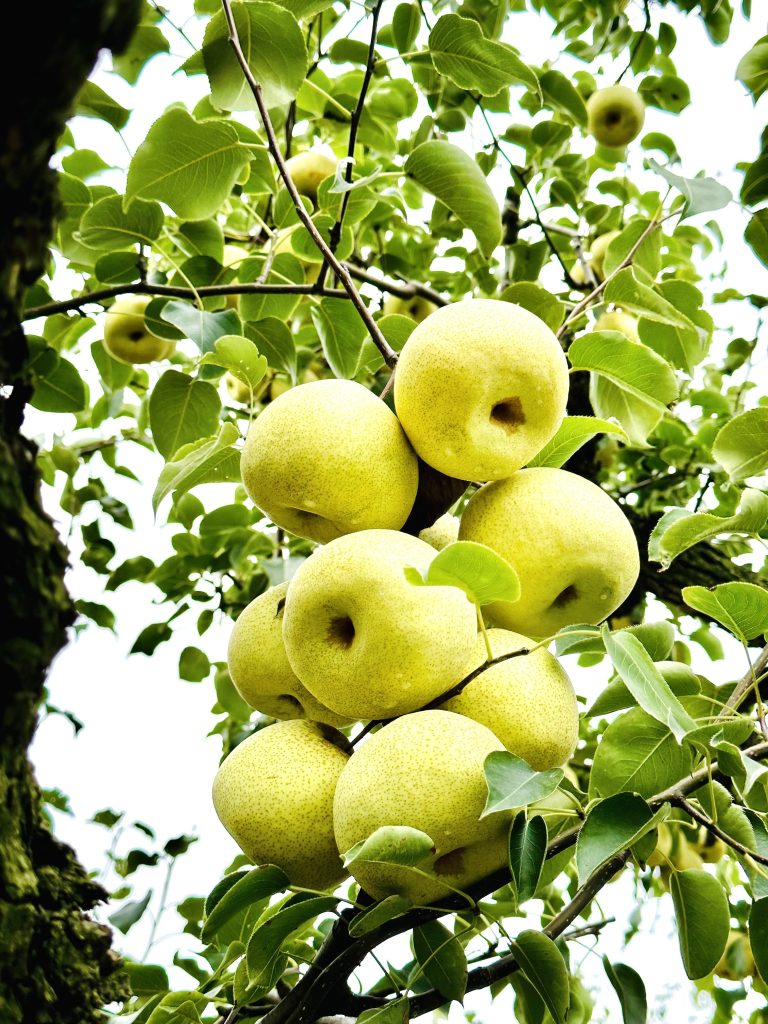
Orchard imagery accompanying the manufacturer’s Dangshan pear story.

The pear sits at the centre of the bowl, and it is where the story begins. The variety introduced is Dangshan Su pear, from Dangshan County in Anhui, China. Its regional name has held geographical-indication protection in China since 2003.The growing area is described as lying near 34° north, on land along the former course of the Yellow River, with loose, aerated soil, plenty of sunshine and differences between daytime and nighttime temperatures.

The manufacturer describes choosing seasonal pears from 70-year-old trees: thin-skinned, white-fleshed, juicy and crisp when fresh. Cooking softens the flesh. You can cut off a small piece, add a little liquid and taste the pear alongside the other ingredients.

2. Indonesian bird’s nest — Fine strands in the liquid

Raw bird’s nest, shown in a manufacturer-supplied photograph; this does not represent the amount in one bowl.

The bird’s nest is introduced as imported from Indonesia, from a supply region described as rainy and ecologically rich. This ingredient comes from swiftlets and is used in sweet dishes in Chinese cuisine.

In the pear bowl, fine strands sit among the liquid and fungus fronds. A spoonful with pear brings together soft fruit and finer strands. The raw-nest photograph helps identify the ingredient; the amount in each bowl should be checked against the product’s declared information.

3. Gutian snow fungus — Soft folds that hold the liquid

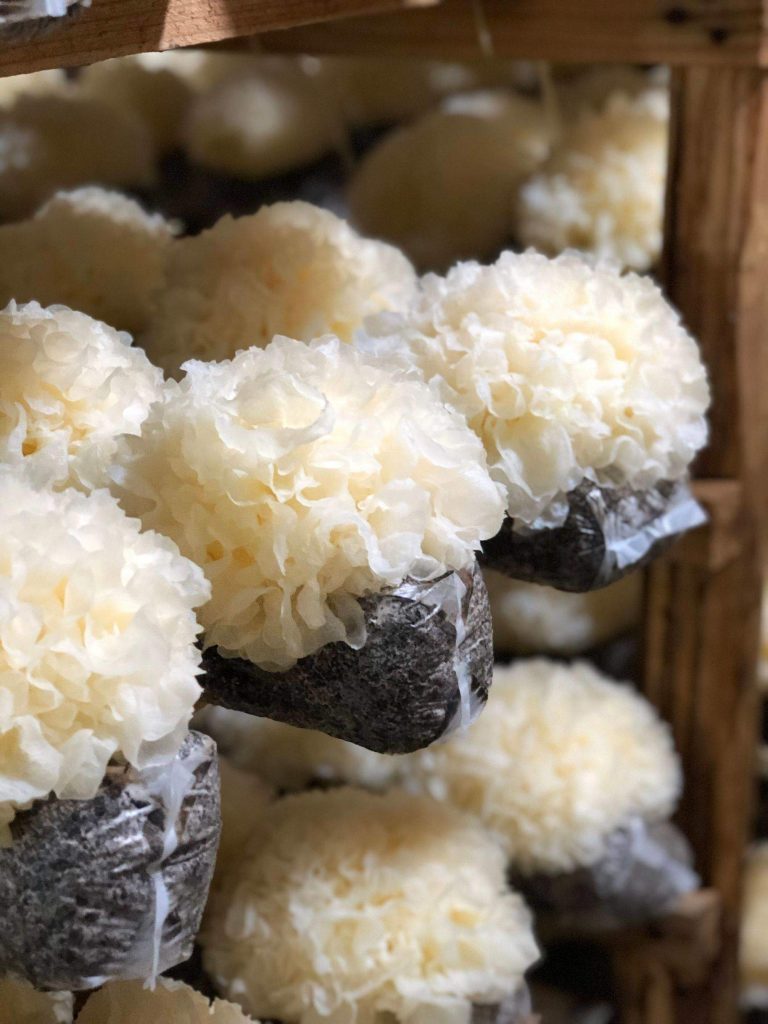
Snow fungus growing on substrate in the manufacturer-supplied photographs.

Snow fungus, also known as silver ear or white fungus, is introduced as coming from Gutian County, Fujian, China. Its story describes wooded mountain surroundings and fresh fungus grown on substrate. One particular detail from the manufacturer is the inclusion of lotus-seed shells and astragalus in that growing substrate. These are cultivation materials, not two extra ingredients added directly to the pear bowl.

The many folds soften during cooking, becoming slippery and holding a little liquid in each spoonful. The thickness of cooked snow-fungus dishes is associated with soluble fibre released during cooking; that texture is not evidence of collagen.Alongside the pear, the fungus offers another kind of softness to notice.

An easy distinction to miss. Bird’s nest and snow fungus are different ingredients: one comes from swiftlets, while the other is an edible fungus. Both can appear in sweet dishes, but their names should not be used interchangeably.

4. Xinjiang red dates — Fruit aroma after sunny days

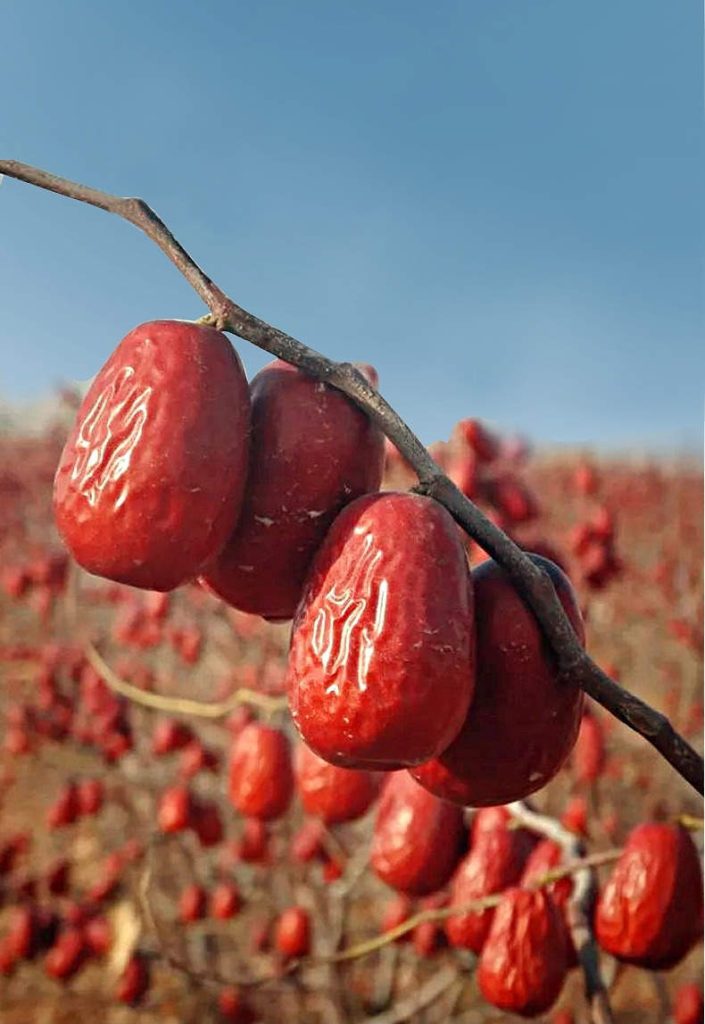
Red dates on a branch in the manufacturer-supplied ingredient photographs.

The red dates in the ingredient story come from Xinjiang, China. Long sunshine hours, little rainfall and day–night temperature differences feature in the growing-region account, along with natural drying. The fruit is described as thin-skinned, fleshy and sweet.

Cooking with pear softens the dates and adds dried-fruit aroma to the liquid. Try a little liquid first, then a piece of date to notice its flesh and skin. Even in one bowl, the individual ingredients retain something of their own character.

5. Goji berries — A little orange red colour

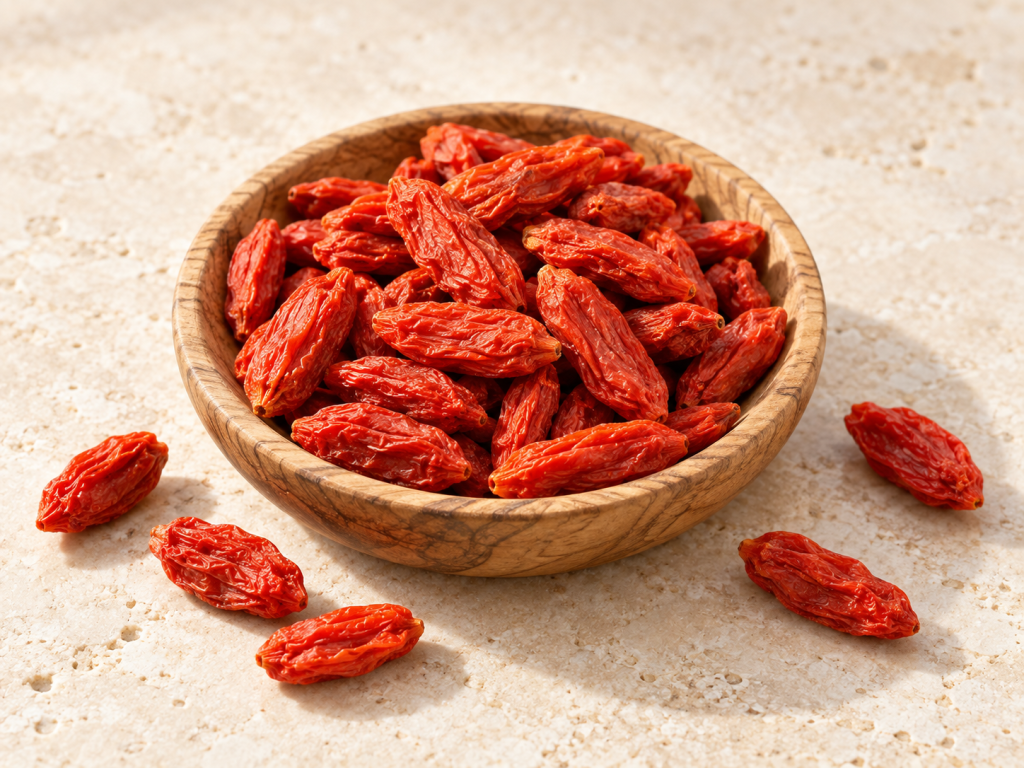
An illustration of dried goji berries.

Goji berries are the small orange-red fruit scattered among the pear, dates and snow fungus. They soften during preparation and can be scooped up with the liquid or eaten with a piece of pear. Their small size and colour add another detail among the larger ingredients, bringing a little variation to each spoonful.

6. Yellow rock sugar — From cane juice to sweetness

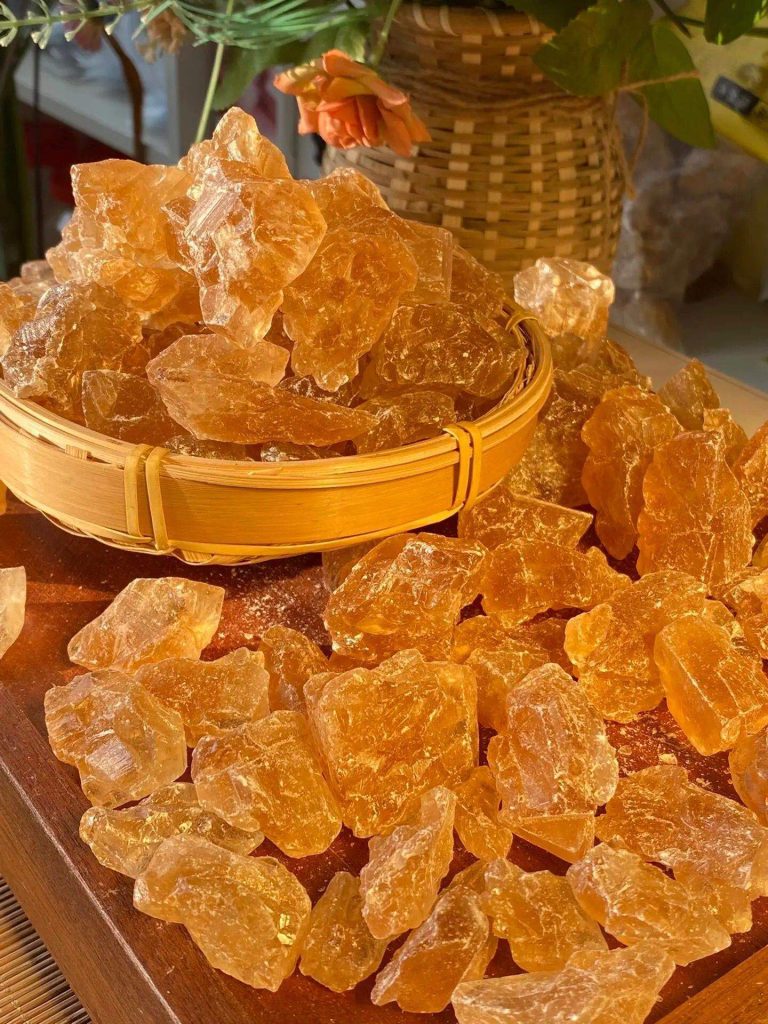
Yellow rock sugar in the manufacturer’s ingredient material.

The yellow rock sugar is described as slowly prepared from fresh cane juice using a traditional method, forming pale-yellow, translucent pieces. As it dissolves, it blends into the liquid around the pear and the other ingredients.

“Gently sweet” describes a taste, not the amount of sugar in the dish. Added rock sugar still falls within the WHO definition of free sugars.If you are monitoring sugar intake, check the nutrition panel and serving size on the label.

From ingredients to a ready-to-eat bowl

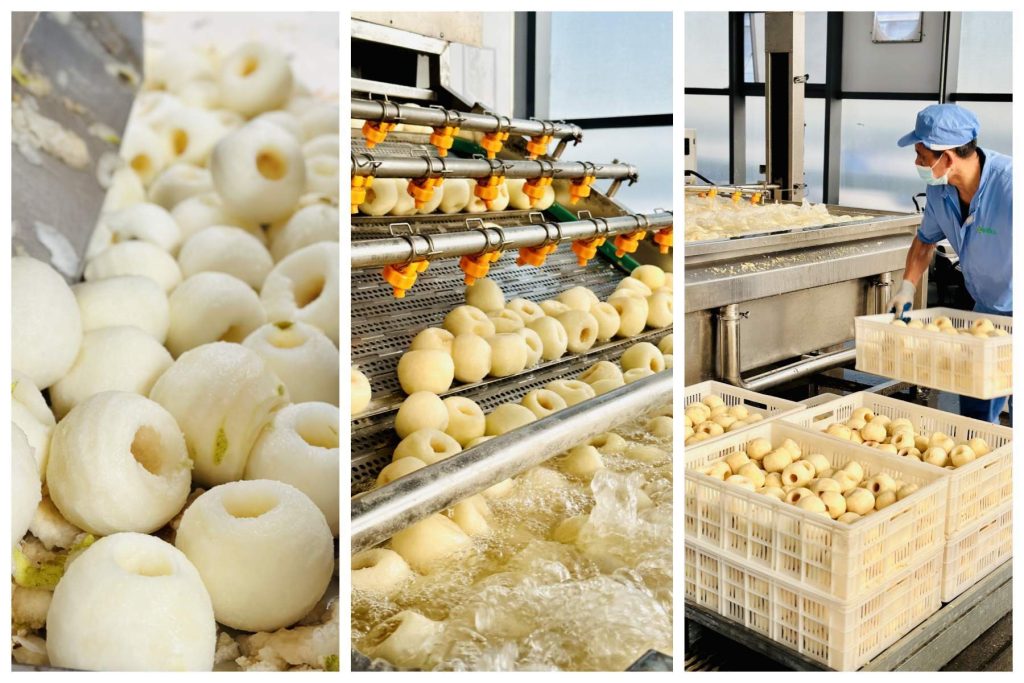
Pears are selected, peeled, cored and cleaned before the ingredients are portioned, cooked and packaged. The preparation photographs show part of the work behind the soft fruit at the centre of the bowl.

Nương Nương’s version contains one 258 g bowl and a separately wrapped spoon. Preparation is already done; open and enjoy it according to the packaging instructions, starting with the liquid or a piece of pear as you prefer.

Pear preparation and cleaning photographs supplied by the manufacturer.

Enjoy it warm or chilled

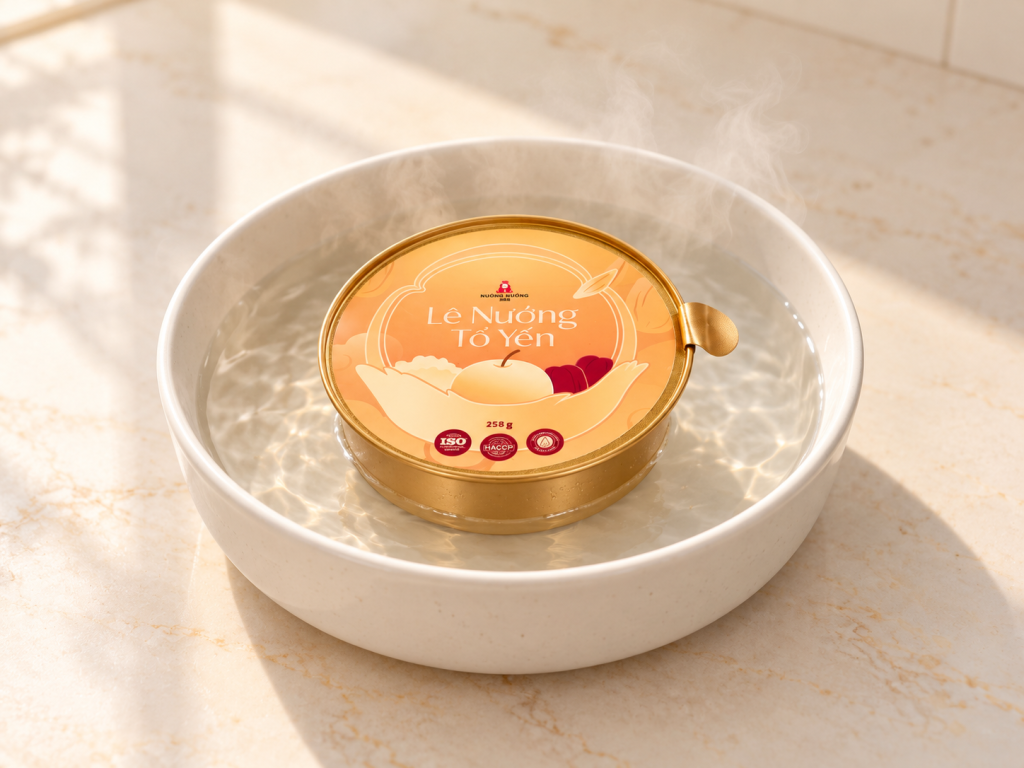
Serve at room temperature, chilled or warmed according to the product instructions. Choose a cool portion for an afternoon pause or a warm bowl to enjoy slowly. For water-bath warming, use suitable equipment and follow the label; do not put the metal bowl or metal lid in a microwave. Check the storage directions and expiry date on the packaging you receive.

Water-bath illustration: the bowl stands upright in warm water below the lid rim. Follow the packaging instructions.

Guiling jelly — a familiar cooling sweet in wellness culture

Guiling jelly is a black herbal dessert with a mild bitterness, often enjoyed with a little honey. Nương Nương’s recipe combines grass jelly herb, turtle extract, reishi, poria and other plant ingredients. Its familiar dark appearance may bring grass jelly to mind, although the two desserts do not necessarily have the same ingredients.

The manufacturer’s story begins in Cantonese sweet soup shops, where a bowl of jelly is an everyday dessert. Explore the ingredients with Nương Nương before they become glossy black jelly, from reishi caps to Yunnan poria and monk fruit associated with Guangxi.

Regional and selection stories come from the manufacturer. Ingredients and pack contents have been checked against Nương Nương’s label; supplementary references appear at the end.

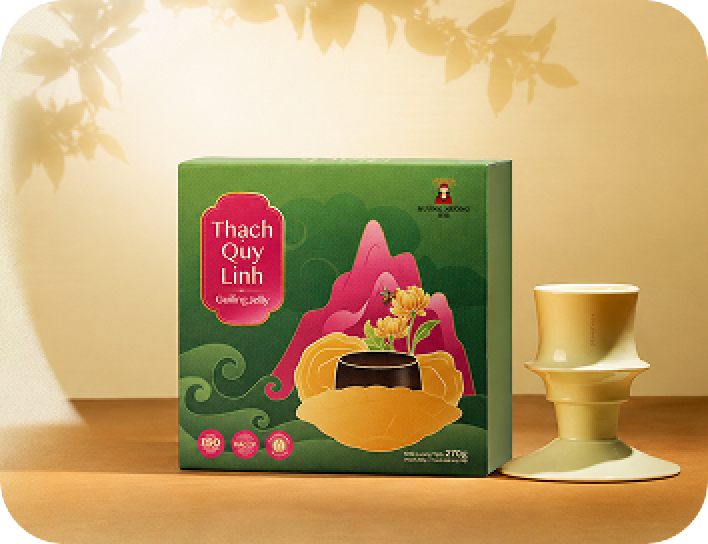
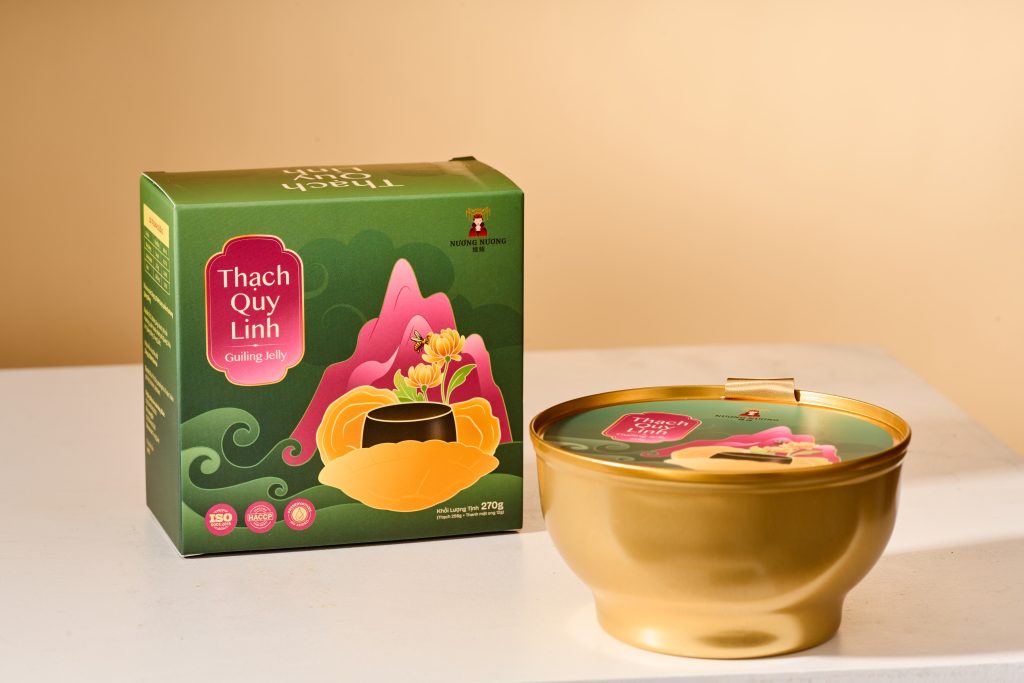
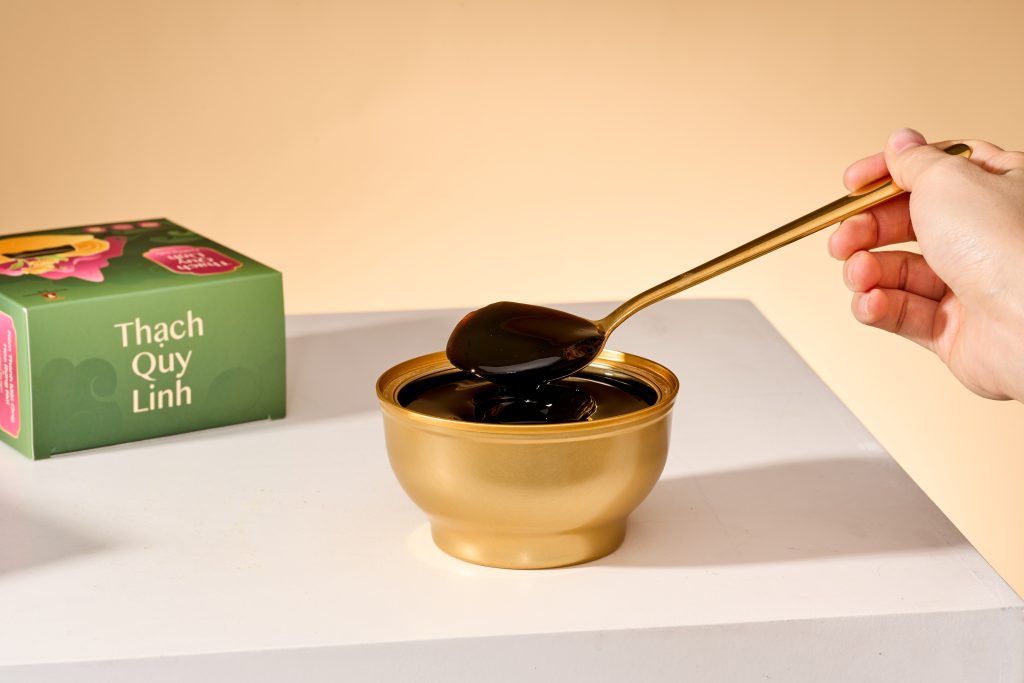
Nương Nương Guiling Jelly: the retail carton and sealed bowl.

1. Turtle extract — an ingredient in this recipe

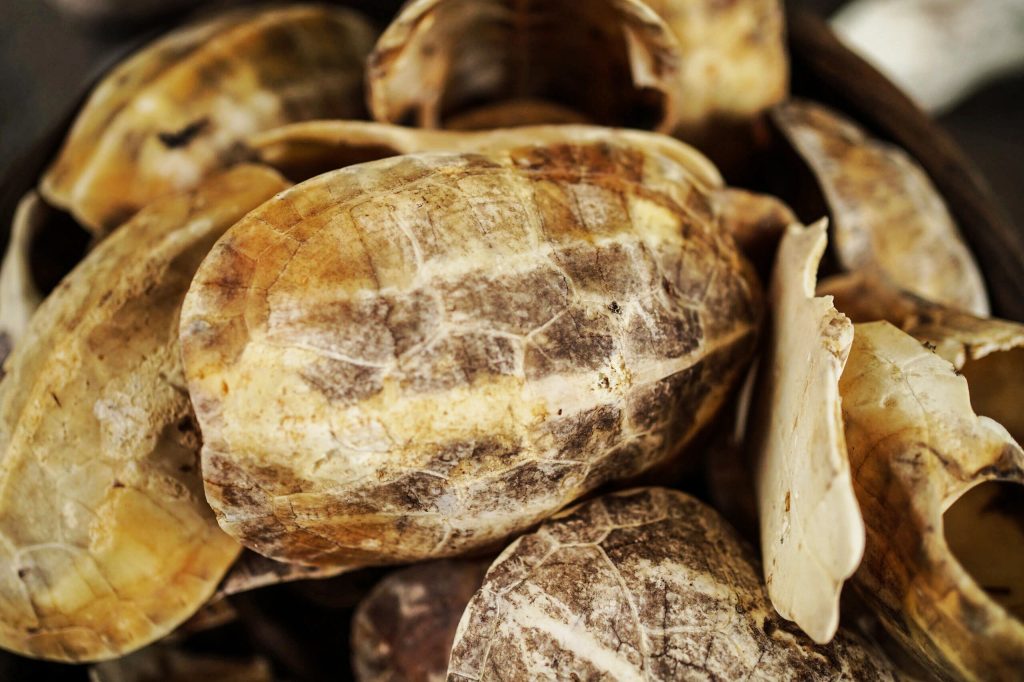
The manufacturer describes turtle-shell material and reports selecting it from turtles aged five to six years. Nương Nương’s label names the ingredient as turtle extract. The age detail belongs to the manufacturer’s account of ingredient selection.

This answers a useful question when choosing the dessert: Nương Nương Guiling Jelly is not vegetarian. The ingredient is processed with the rest of the recipe. The shell photograph illustrates the material before preparation, rather than the amount in each bowl.

Turtle-shell material in a manufacturer-supplied photograph.

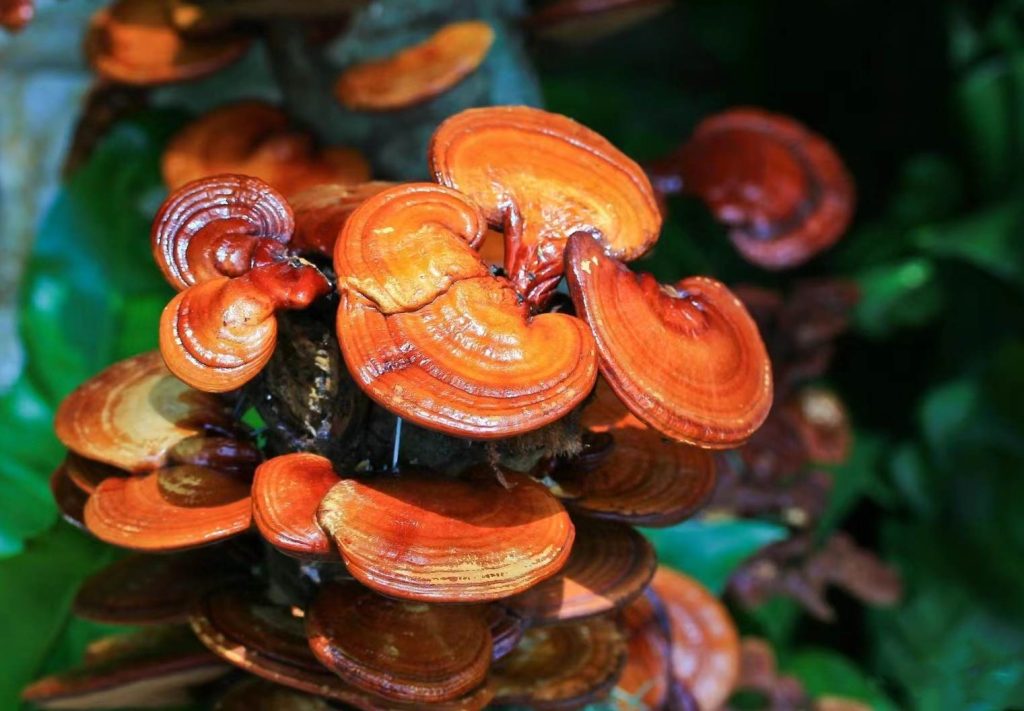
2. Reishi — the reddish brown mushroom caps

Reishi appears in the manufacturer’s title, 灵芝龟苓膏. The glossy reddish-brown caps and layered markings give it a recognisable form among the leaves, flowers and fruit in the recipe.

The manufacturer describes reishi as having a woody aromatic character. In the dessert it is processed into the mixture, so you experience the combined flavour rather than encountering a whole mushroom cap as pictured.

Reishi in the manufacturer’s ingredient photographs.

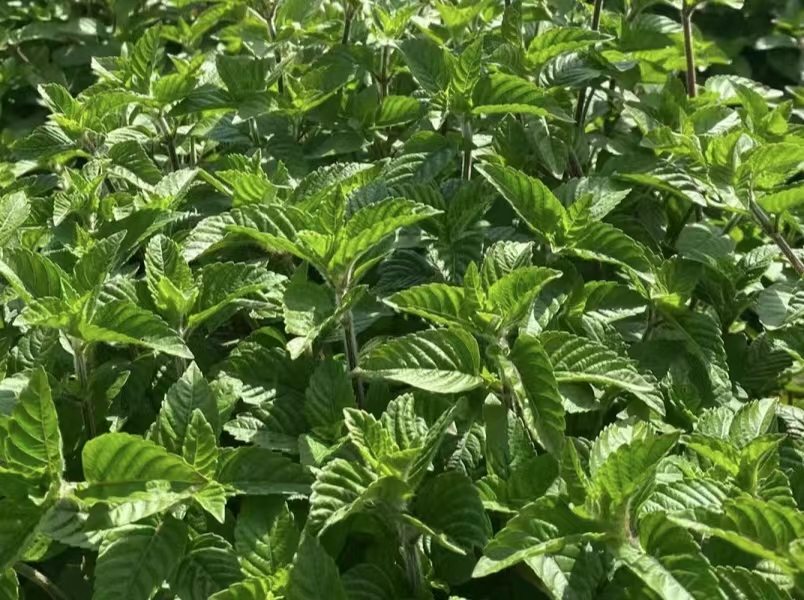
3. Grass jelly herb — a connection with a familiar dessert

The material names grass jelly herb as 仙草 or 凉粉草 and introduces it within Lingnan food culture. Its dried stems and leaves can be cooked, with the resulting liquid combined with starch to make jelly.[1]

This ingredient connects Guiling with familiar grass jelly. The recipe here also includes turtle extract, fungi and several other ingredients. Read the ingredient list when choosing a dessert, rather than relying on the bowl’s black colour alone.

Grass jelly herb, named 仙草 or 凉粉草 in the source.

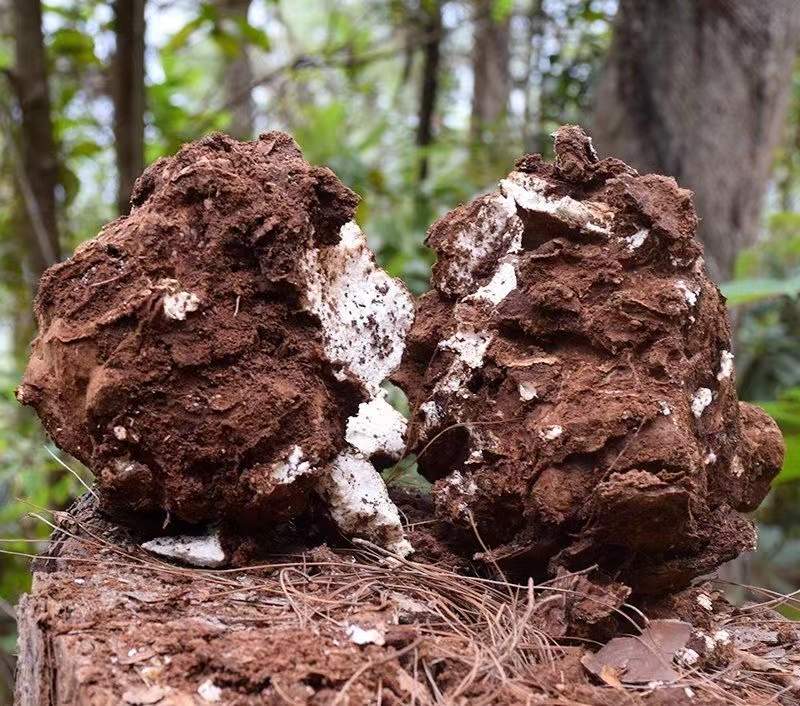
4. Yunnan poria — the white interior of a fungal mass

The manufacturer introduces poria from Yunnan’s mountains, associated with older trees. The photograph shows a rough brown exterior and white interior, helping you picture the ingredient before it is cut and prepared.

Poria, or 茯苓, is a fungal sclerotium, a compact mass of fungal tissue.[2] Alongside reishi, it is one of this recipe’s fungal ingredients. Yunnan is the growing-region story reported by the manufacturer.

Raw poria in the manufacturer’s Yunnan mountain ingredient story.

An easy distinction to miss. Poria and tufuling are different ingredients. Poria is a fungal sclerotium; tufuling is a rhizome from a Smilax plant.[2][3] Both Nương Nương’s label and this manufacturer’s material name poria.

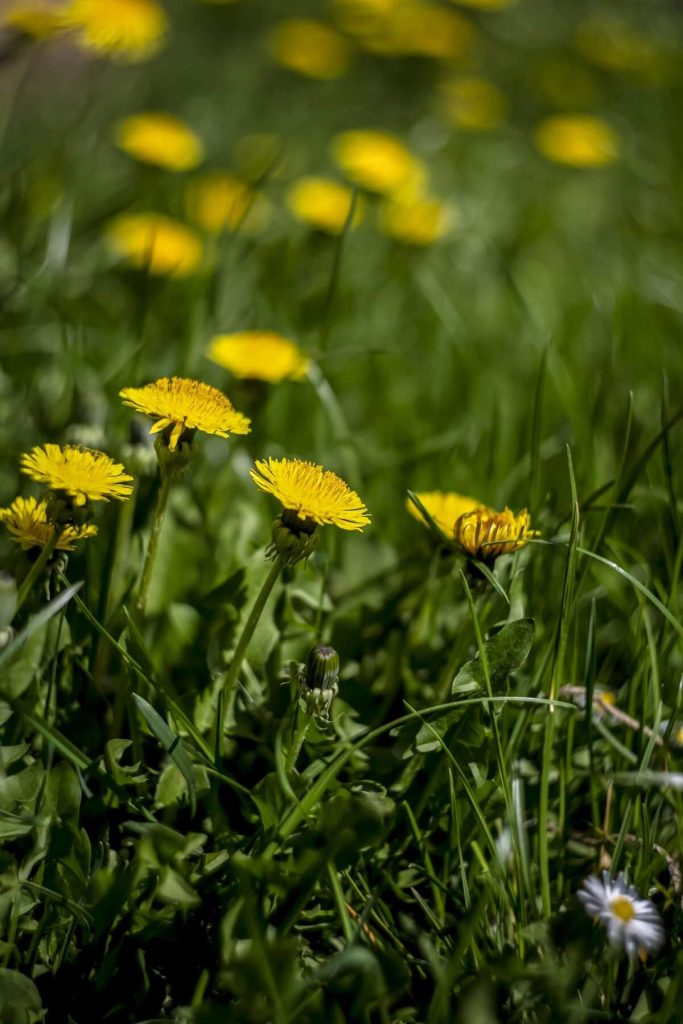
5. Dandelion — yellow flowers among the grass

Dandelion appears as 蒲公英 in the ingredient list. The photograph of yellow flowers among green grass gives a shape to a name on the label. Once the ingredients are combined and cooked into jelly, the original plant is no longer visible; this illustration does not establish that only the flowers are used.

Dandelion in the source’s plant-ingredient photographs.

6. Honeysuckle and chrysanthemum — two flower shapes

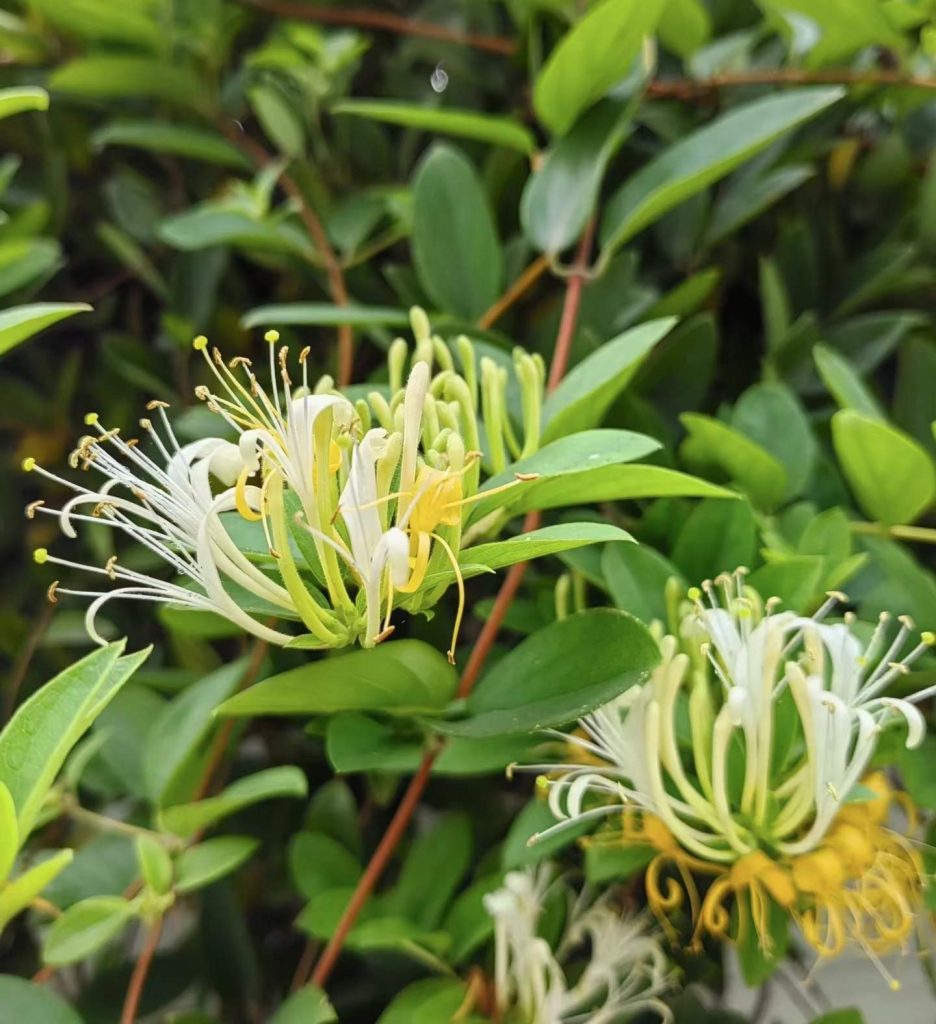
Honeysuckle has slender white and yellow flowers, as pictured. Chrysanthemum has many layers of petals around its centre. The manufacturer introduces them as a pairing that brings floral character to the dessert.

In the bowl they are prepared with the other ingredients. Chrysanthemum is part of this Guiling recipe; Nương Nương’s separate Chrysanthemum and Dendrobium Jelly has its own recipe and story.

White and yellow honeysuckle flowers in the manufacturer’s ingredient photograph.

7. Monk fruit — a Guangxi specialty story

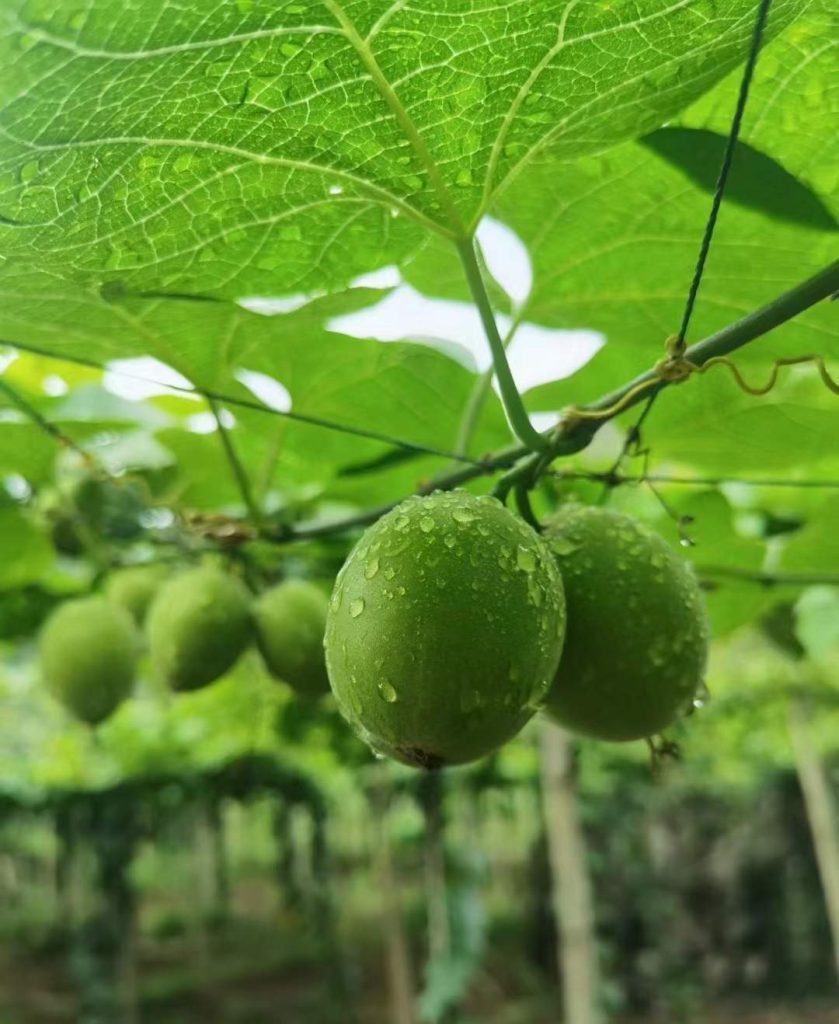
For monk fruit, the manufacturer introduces a specialty associated with Guangxi. The photograph shows the round green fruit on its vine before drying. The manufacturer describes a clear, sweet taste that contributes to the mixture’s flavour.

Containing monk fruit does not automatically make the dessert sugar-free or low in calories. If you are monitoring sugar, check the nutrition label and include any honey or toppings you add.

Green monk fruit in the manufacturer’s Guangxi specialty story.

8. Liquorice, cogongrass rhizome, water and starch

Liquorice and cogongrass rhizome are also in the recipe; Nương Nương’s label specifies fresh cogongrass rhizome. They complete the ten featured ingredients described here, alongside water and starch. These ingredients include plants, fungi and animal material.

Water and starch help form the base for the prepared ingredients. The final texture comes from the complete formulation and cooking process, so one ingredient photograph cannot explain the dessert’s entire set.

Ready-to-eat jelly, with honey kept separate

After cooking and sealing, the jelly is ready to enjoy. Nương Nương’s pack contains 258 g of jelly, a separate 12 g honey sachet and an individually wrapped spoon. Try a small spoonful plain first, then add honey gradually to find the sweetness you prefer.

Chill it according to the label if you like a cool serving. You can spoon it directly from the opened bowl; the retail bowl contains a continuous set jelly. After a meal or during a break, it offers a change of flavour to enjoy at your own pace.

A spoonful of Nương Nương Guiling Jelly from the opened bowl.

The label does not recommend it for pregnant or breastfeeding people or children under three. Follow the storage instructions and expiry date on your own pack, and finish within 24 hours of opening.