

Fish maw is the cleaned swim bladder of a fish, prepared as food. Known as 花膠 or 鱼胶, it becomes tender with a delicate bite when cooked, taking on the flavours of a savoury broth or a gently creamy dessert.
Its journey connects Qing-era banquets with today’s home cooking and dessert jars. Here is how the ingredient is obtained, what changes when it is soaked, and how to understand its nutrition and place in traditional Chinese medicine.
Actual Nương Nương photographs appear alongside labelled illustrations. Traditional Chinese medicine, ingredient nutrition and finished-food information are distinguished throughout; reading sources appear at the end.
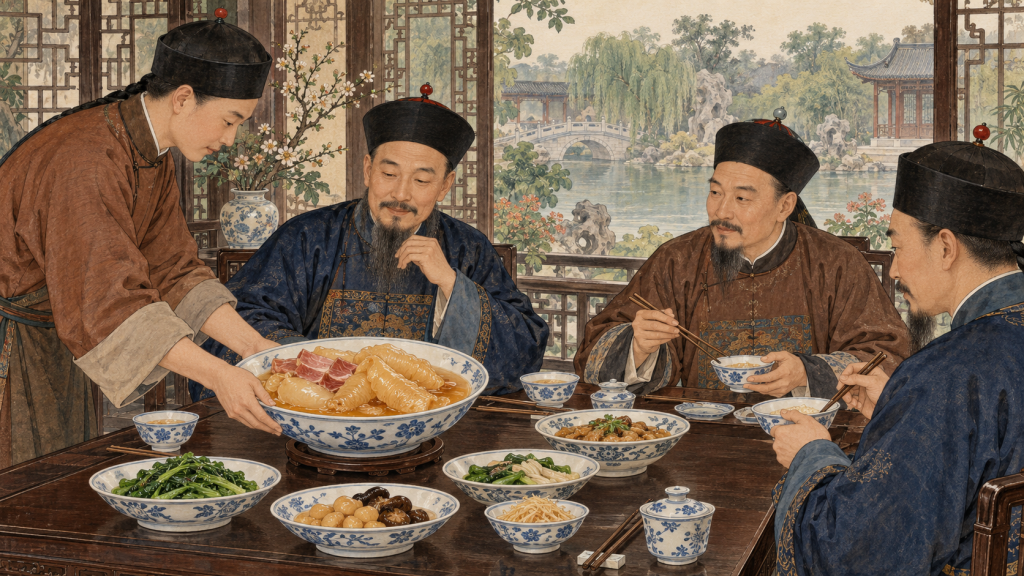
1. A delicacy at the tables of high officials in Qing China
Fish maw had a place in the meals prepared for high-ranking officials in Qing China. In volume 4 of Yangzhou Huafang Lu, Li Dou describes kitchens serving officials and includes fish maw braised with ham (鱼肚煨火腿) among first-rank dishes. It is a concrete glimpse of its status as a banquet delicacy.
In Cantonese and Hong Kong food culture, fish maw remains a valued dried seafood served at banquets and family celebrations. Its tender texture and ability to absorb broth help explain why cooks give it time and care.
2. Where fish maw sits inside the fish
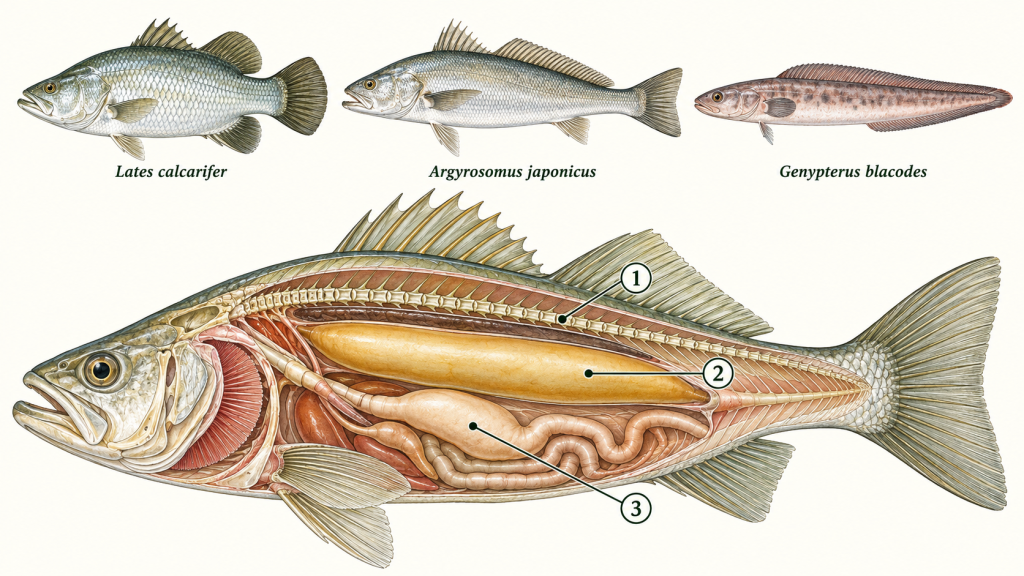
The swim bladder helps many bony fish control buoyancy. It lies in the upper body cavity, below the backbone and above the digestive organs. Fish maw comes from this sac, rather than the stomach, flesh or roe.
Several species supply edible fish maw. The illustration shows barramundi, mulloway and ling as examples; their bladder shapes and sizes differ. These examples do not identify the species used in a particular Nương Nương batch.
3. From the fish to dried and soaked fish maw
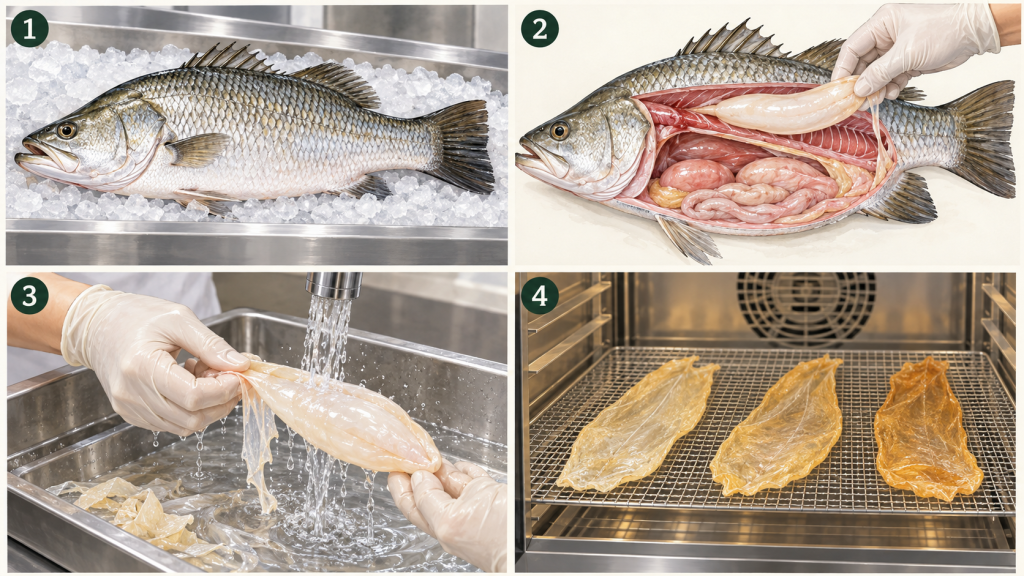
The commercial process can be understood in four stages:
- Process the fish. Fish intended for food enter a hygienic processing chain, with the raw material kept chilled.
- Separate the swim bladder. The sac is carefully removed from the upper body cavity.
- Clean and trim. Residual blood, fat and membranes are removed and the bladder is cleaned under food-processing controls.
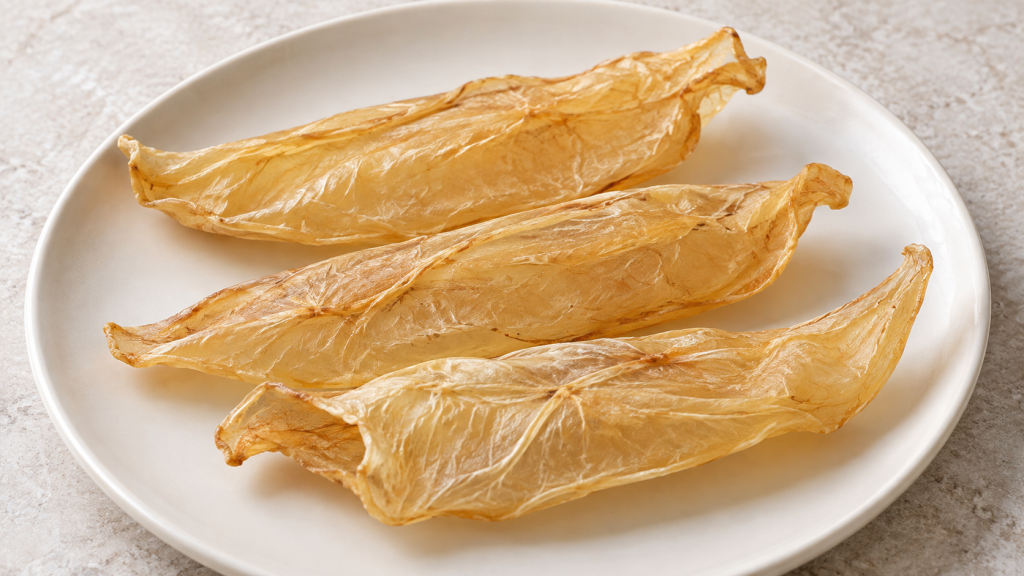
- Dry. Controlled drying removes water, producing the firm, lighter, straw-gold ingredient sold as dried fish maw.
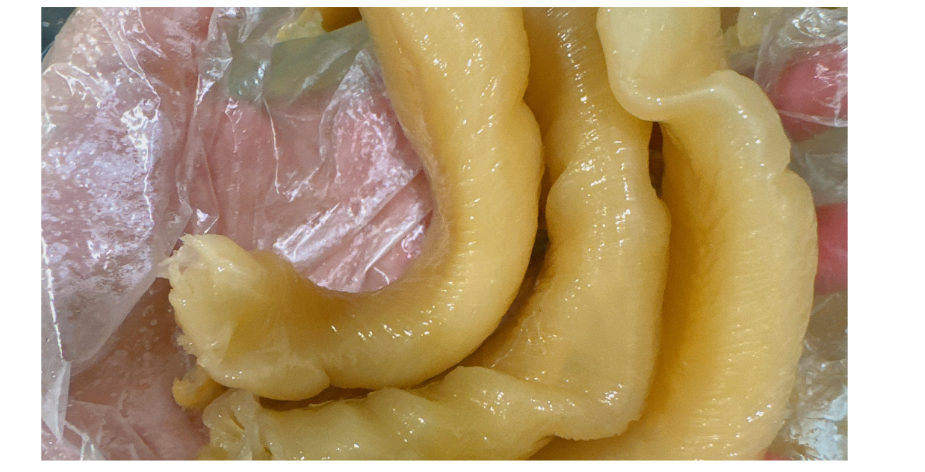
Before cooking, dried fish maw is rehydrated. The dry form is firm and compact; the soaked form takes up water and becomes fuller, softer and more flexible. Colour and expansion vary by species, thickness and preparation, so appearance alone cannot tell you how much protein a portion contains. Follow the supplier’s instructions for soaking and cooking the type you buy.
4. Why Zhong Yi values fish maw
In an RTHK programme, registered Chinese medicine practitioner Ho Wai Kit (何慧潔) describes fish maw as sweet in flavour and neutral in nature, traditionally used to nourish yin, moisten dryness, nourish blood and support the liver and kidney systems. These ideas underpin its place in traditional food-based care, including complexion care.[3]
Within this approach, suitability depends on the individual. “Yin,” “blood” and the traditional organ systems belong to that medical framework; they are not clinical trial findings showing that a prepared dessert treats disease.
5. Reading the protein, fat and nutrient figures
ASEANFOODS lists fish maw, dried and uncooked, item AAG52/THG1, with these reference values per 100 g.
| Component | Amount |
|---|---|
| Energy | 279 kcal |
| Protein | 64.1 g |
| Fat | 0.5 g |
| Available carbohydrate | 4.4 g |
| Water | 23.5 g |
| Calcium | 31 mg |
These describe one ingredient entry, not every fish maw. Soaking, cooking and adding milk change the concentration per 100 g. Iron, zinc and vitamin values are not reported in this entry.
A study of three fish species also found protein-rich, low-fat maws, with composition varying between species. Collagen is part of this protein story: it is a structural protein associated with the ingredient’s familiar texture.
Enjoy collagen with a clear understanding. Eaten collagen is digested, and the body uses protein-building materials where needed. Harvard notes limited evidence that eating collagen directly benefits the skin. Fish maw can sit within a varied diet without turning the dessert into a promise about your complexion.
For a prepared jar, protein, fat, sugars and energy depend on the whole recipe, actual fish-maw quantity and serving size. Use that product’s own nutrition information; the dried ingredient’s numbers cannot be transferred to a finished dessert.
6. Modern ways to bring it to the table
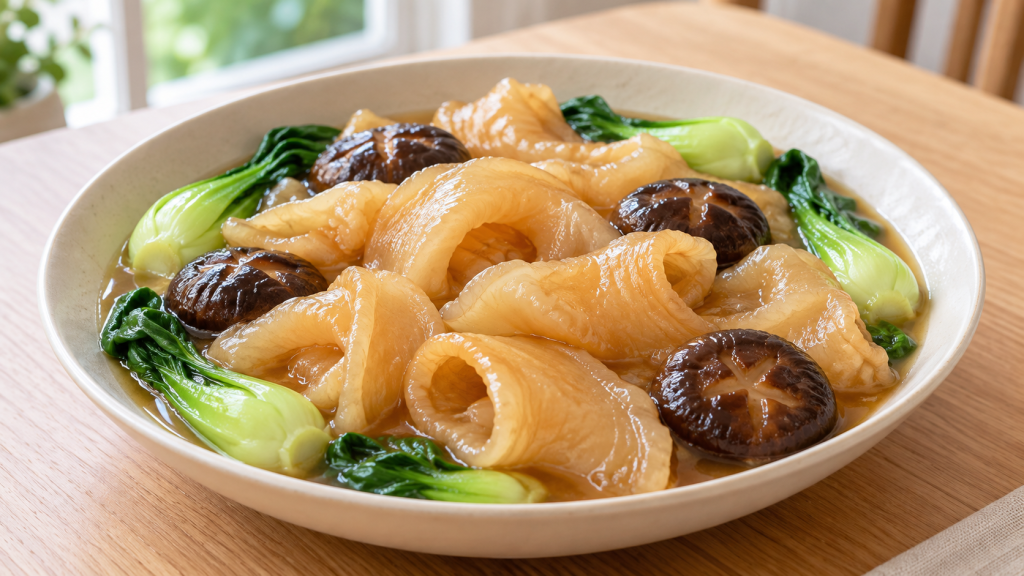
Braised fish maw with shiitake and greens. Gently braise prepared fish maw and shiitake mushrooms in a savoury chicken-stock base until tender, then add bok choy near the end. Serve with rice. Fish maw is the main ingredient, with its soft bite and broth-filled folds at the centre of the dish. It also works in soup or a smaller noodle-bowl portion.
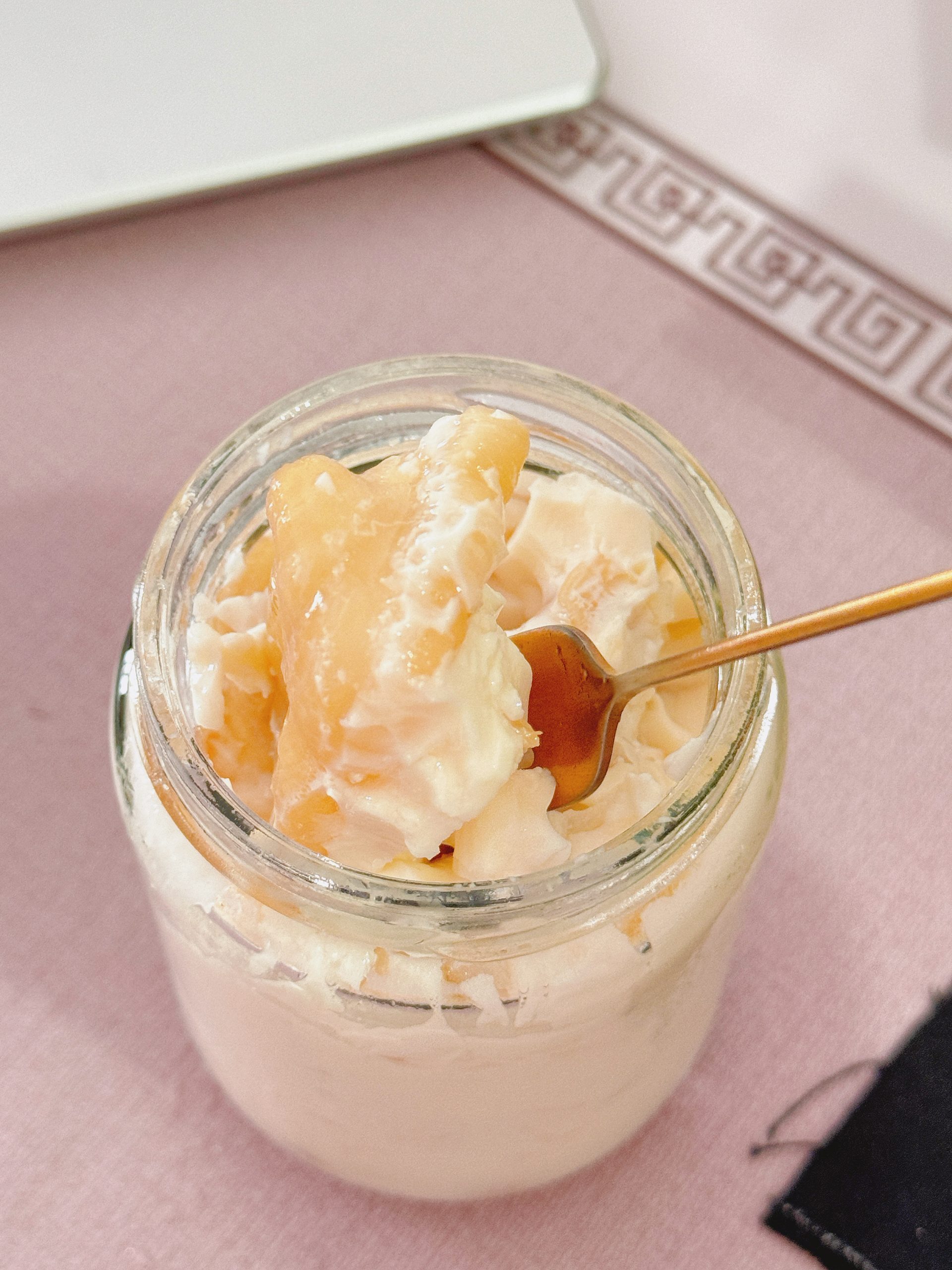
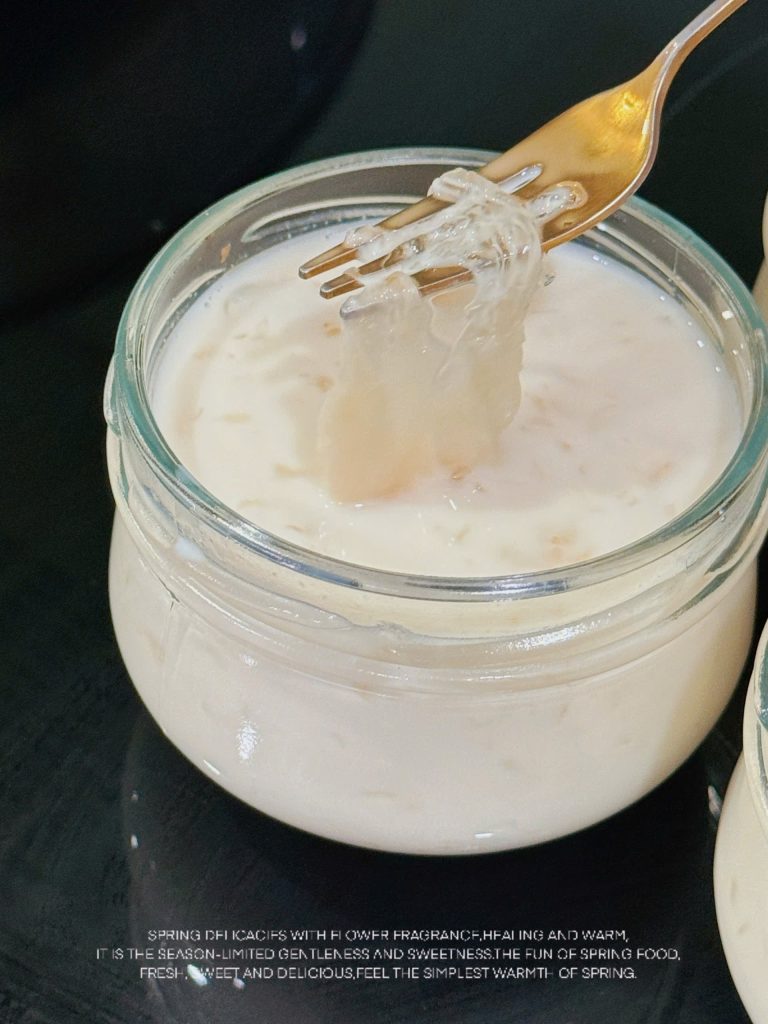
A milk dessert to eat with a spoon. A milk base gives a gently creamy finish; some recipes set softly when chilled. Black sesame brings a nutty character, while black rice and purple sweet potato offer another flavour direction. Setting depends on the whole recipe and chilling conditions; it does not measure collagen content.
Fish maw with red dates and red beans. Five Reds-style preparations pair fish maw with familiar plant ingredients for gentle sweetness and a soft, hearty texture. In Zhong Yi, red dates (红枣) are traditionally associated with replenishing qi and nourishing blood (补益气血). This gives the pairing a place in everyday food-based care, or 食养.
The medicinal bean 赤小豆 is traditionally described as supporting the spleen system and clearing dampness (健脾利湿); that description should not be applied automatically to every red-bean variety. These are traditional ingredient roles, not evidence that combining them makes a jar treat anaemia, raise iron levels or deliver a stronger therapeutic effect.
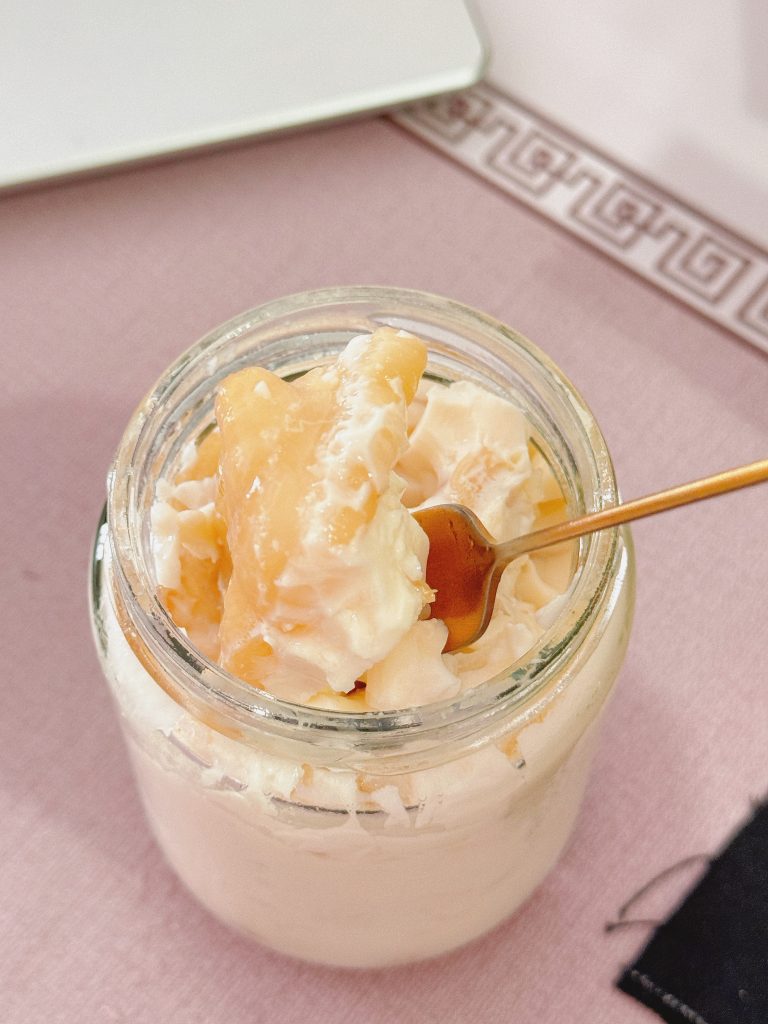
Nương Nương’s 230 ml range includes Five Reds, Black Rice & Purple Sweet Potato and Black Sesame, alongside the 150 ml Fish Maw & Bird’s Nest Milk. The photograph below shows an actual jar during preparation, with fish maw, red dates and red beans visible; it is not a finished serving or a complete ingredient list.
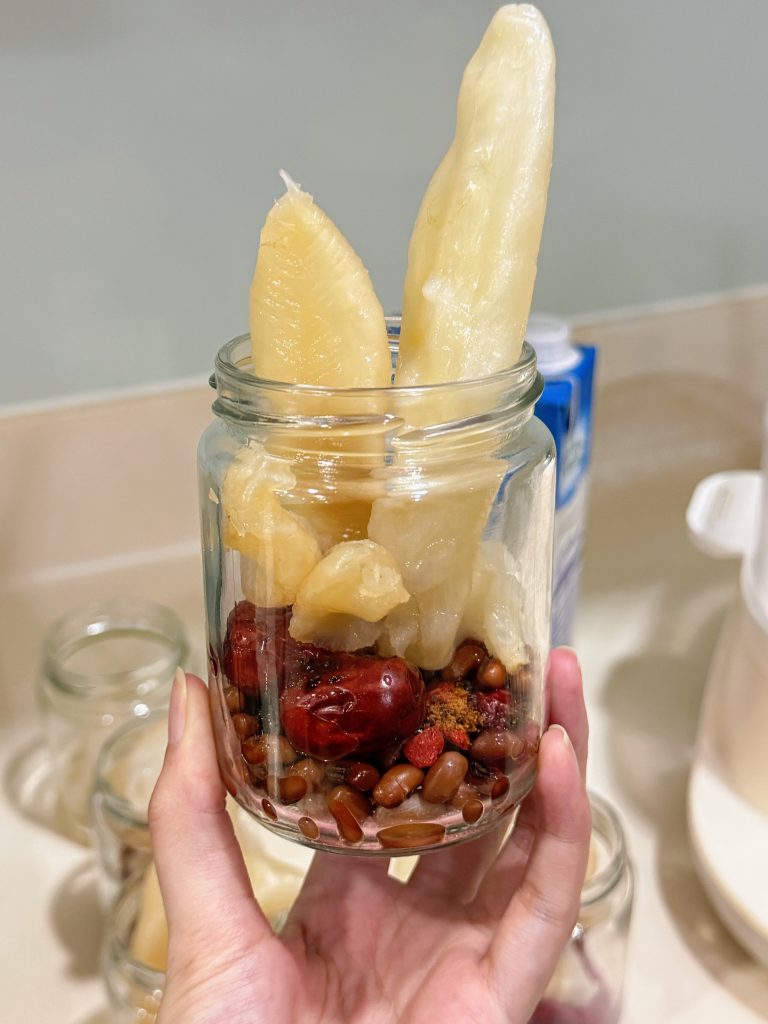
Keep Nương Nương jars refrigerated in the chilled compartment, not the freezer, and follow the labelled use-by date. Unopened jars keep for seven days with continuous refrigeration; once opened, keep chilled and finish the same day. People with fish allergy should avoid fish maw; check milk and sesame ingredients for the selected recipe too.
7. Asian actresses who have shared their enjoyment of fish maw
Fish maw appears in celebrity food stories too, from familiar soup to convenient milk-based jars. There are several documented examples:
- Gillian Chung (Chung Hân Đồng): a Ta Kung Pao interview dated 3 May 2010 reports her preference for fish-maw soup.
- Fann Wong (Phạm Văn Phương): CNA/8days on 13 November 2020 records a Crystal Jade meal that included braised fish maw with hairy crab.
- Charmaine Sheh (Xa Thi Mạn): Oriental Daily on 30 May 2026 reports her account of milk-stewed fish-maw jars while filming. In the same account, she disclosed an endorsement relationship with a fish-maw brand.
Their stories show how a traditional ingredient fits different ways of eating. For your table, that might mean a savoury family dish or a softly set dessert: choose a flavour and portion you enjoy, understand what you are eating and take time to savour it.