


Sudden, extremely severe pain, new weakness, trouble speaking, confusion, or high fever with a stiff neck needs emergency care. Do not use an illustration to rule out an emergency.
This Chăm mình article develops ideas from Dr. Shuu-Jiun Wang’s (王署君) conversation on 博音 EP246. Practical guidance was checked against the clinical sources below. General education for adults; this article has not received individual clinician review.
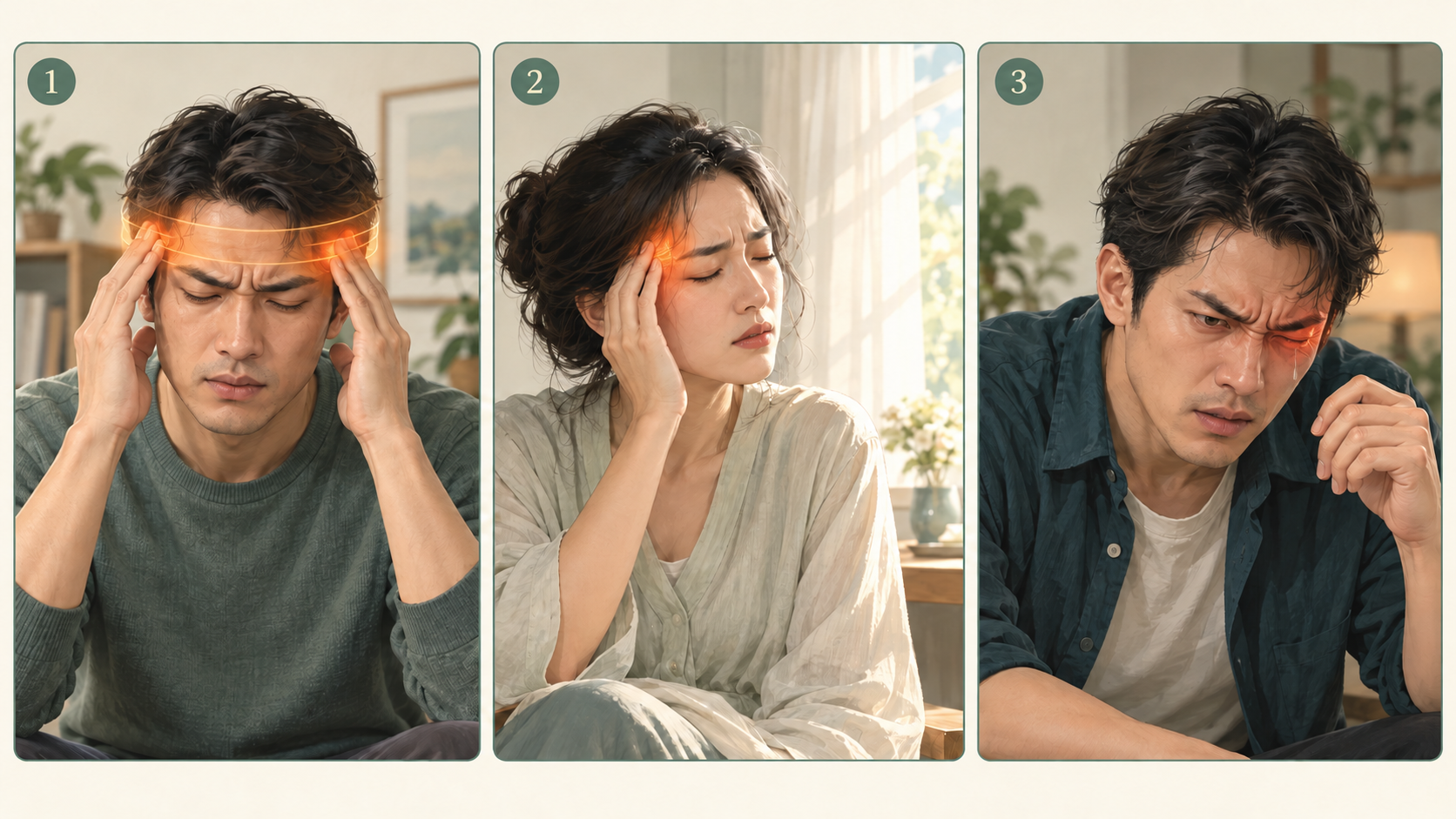
1. Three patterns to understand, rather than self-diagnose
Tension-type headache commonly feels pressing or tightening on both sides. The name does not mean every episode comes from worrying; sleep and other factors may also be involved.
Migraine often brings throbbing pain, sometimes on one side, with nausea or sensitivity to light or sound. Not everyone with migraine has one-sided pain.
Cluster headache is rarer: extremely severe pain around one eye, possibly with tearing or redness on the same side and restlessness. It needs assessment and specific treatment; ordinary paracetamol or ibuprofen does not treat these attacks.
Dr. Wang also distinguishes headache types in the original discussion. Symptoms can overlap, and other causes are possible.
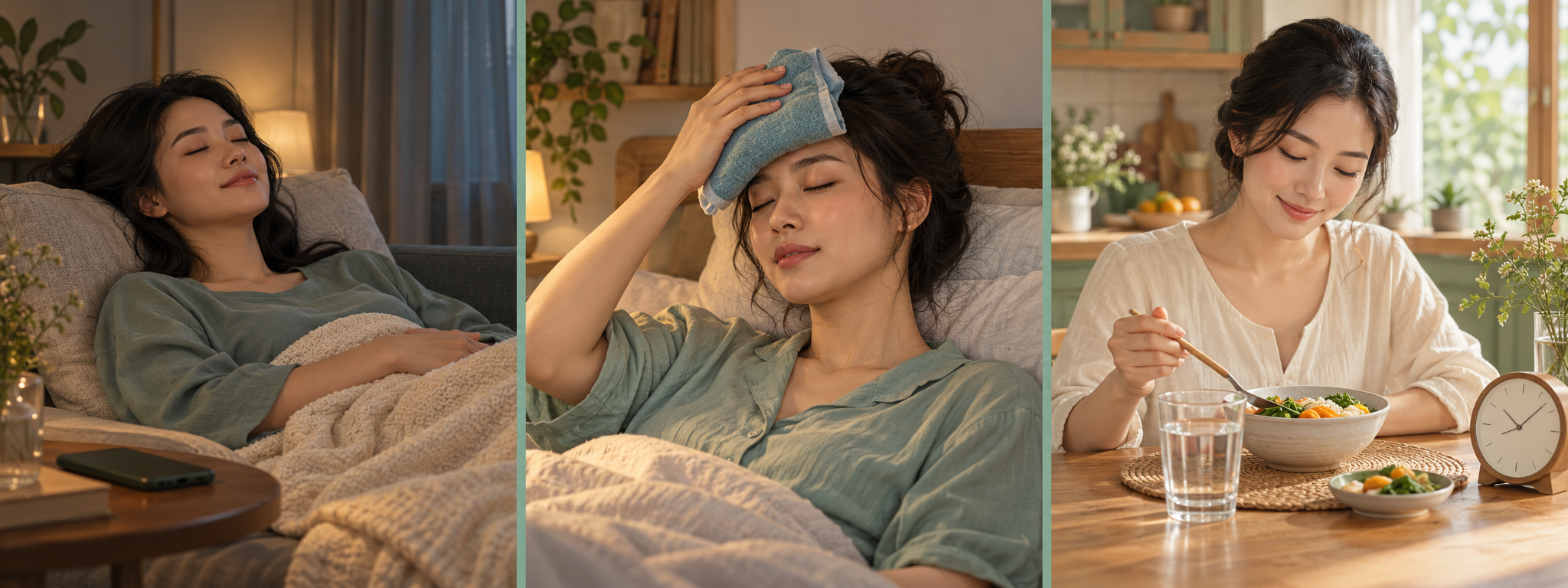
2. Start with what helps you feel comfortable
During a familiar migraine, try a quiet room, softer light and a cool pack wrapped in cloth if that feels soothing. Do not place ice directly on skin. These measures support comfort and do not replace your advised medicine or treatment plan.
Between episodes, regular meals, enough water and a reasonably consistent sleep schedule are practical starting points. Self-care need not become a long list to perform perfectly. Begin with the part of your routine that is easiest to overlook.
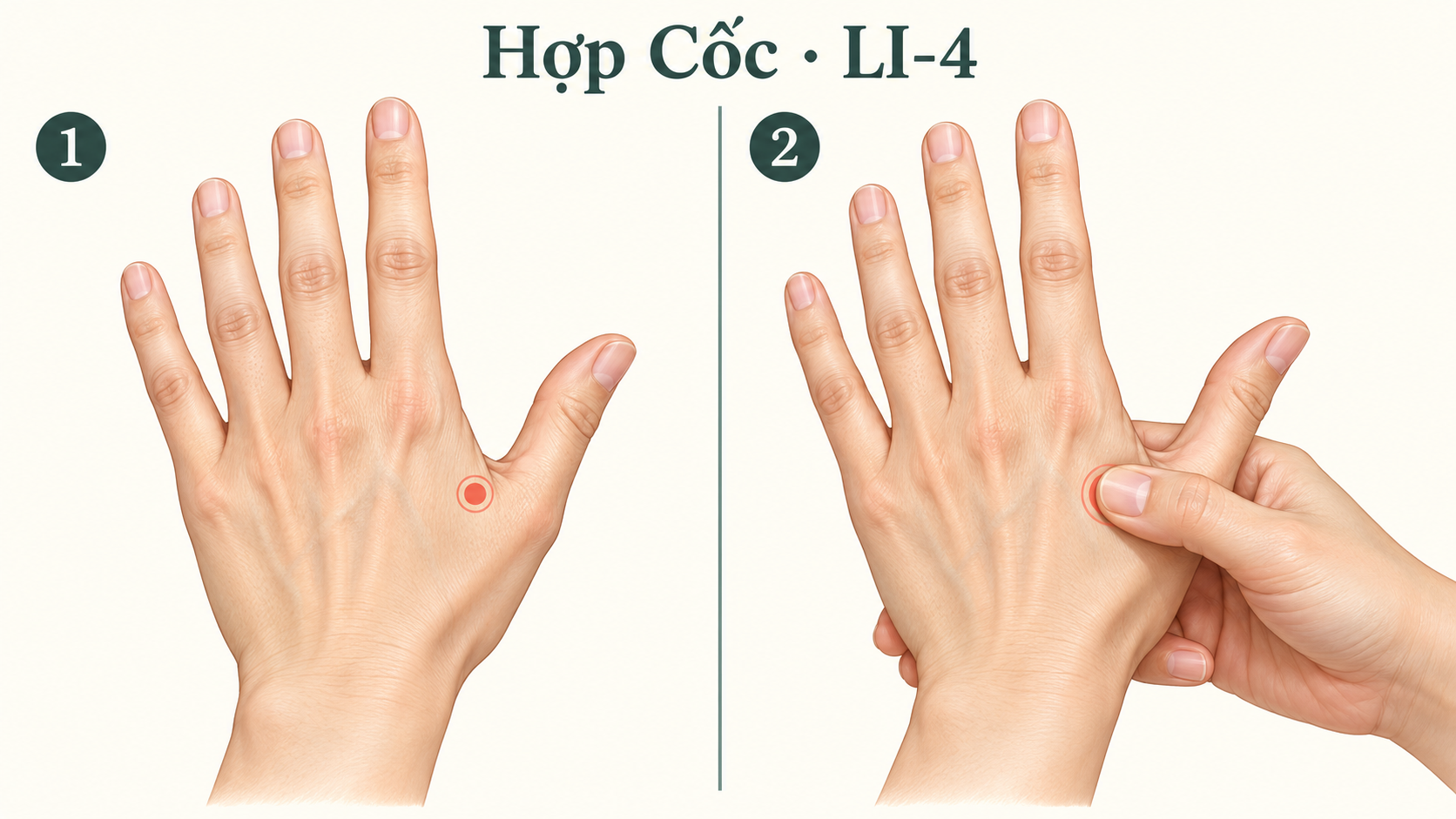
3. If you want to try Hegu acupressure
Hegu, or LI-4, is on the back of the hand between the bases of the thumb and index finger. MSK describes firm, non-painful circular pressure for about 2–3 minutes. Its linked guide provides pictures to locate the point and follow the steps.
Do not use this point during pregnancy, or over broken, irritated or infected skin. This is an optional comfort measure, not a way to identify the cause of a headache or delay assessment of unusual symptoms.
Something that helps you feel more comfortable does not necessarily treat the cause. Both ideas belong in self-care.
4. Notice patterns without blaming a single meal
One headache after a meal or late night does not establish a cause. Record dates, duration, symptoms, medicines, meals, sleep and effects on daily life. If you notice a menstrual pattern, include that for discussion at your appointment.
The purpose is to notice a repeating pattern and help a clinician understand your experience, not to track every detail perfectly. For frequent or hard-to-control pain, bring that record to an appointment instead of continually adding isolated remedies.

5. Recognise when you need support
Book an assessment if headaches recur, worsen or interfere with life. New severe eye pain, vision changes, or a new or severe headache during pregnancy or after birth needs urgent assessment. A first episode of a drooping eyelid or unequal pupils needs emergency care, even if you suspect cluster headache.
One small step today is to record your most recent episode and what helped or did not help. If your next question is whether to take a painkiller, the related article below explores that decision.